New Releases
Revised MARPOL Annex VI (IA664E)
Following the entry into force of MARPOL Annex VI on 19 May 2005, MEPC 53 (July 2005) agreed to the revision of MARPOL Annex VI and the NOx Technical Code with the aim of significantly strengthening the emission limits in light of technological improvements and implementation experience, and then instructed the BLG Sub-Committee to prepare the draft amendments to MARPOL Annex VI and NOx Technical Code.
As a result, MEPC 58 (October 2008) considered and adopted the revised MARPOL Annex VI and the NOx Technical Code 2008, which are expected to enter into force on 1 July 2010 upon their deemed acceptance on 1 January 2010. This publication contains the revised MARPOL Annex VI and the NOx Technical Code.
Manual on Oil Pollution, Section V, 2009 Edition
Manual on Oil Pollution – Section V: Administrative Aspects of Oil Pollution Response, 2009 Edition
The Marine Environment Protection Committee (MEPC), at its thirty-third session, agreed that a new section V of the IMO Manual on Oil Pollution, dealing with administrative aspects and, in particular, with the roles and functions of entities which could be involved in an oil pollution emergency and its aftermath, should be developed. The present text is a revision of the first edition of the Manual, published in 1998, taking into account changes and new information on the topic since the original version.
This section of the Manual on Oil Pollution is intended to provide the reader, in particular on-scene commanders, lead agencies and others involved in the management of oil pollution response, with an appreciation of the various interests involved in an oil pollution emergency and its aftermath, as well as a general review of the international legal regimes governing limitation of liability and compensation for oil pollution damage.
This section is not intended to provide an authorized or definitive commentary on the legal relationships between the various entities involved in an oil pollution emergency or an interpretation of relevant international conventions. The reference section includes sources of more comprehensive information on these subjects, and the reader is encouraged to make use of them if more detailed information is required.
BCH Code, 2009 Edition
This publication contains the Code for the Construction and Equipment of Ships Carrying Dangerous Chemicals in Bulk (BCH Code) and information related to that Code. The Code was originally adopted in 1971 and was altered by a series of amendments between 1972 and 1983 before an amended version was adopted by the Marine Environment Protection Committee (MEPC) in 1985 and by the Maritime Safety Committee (MSC) in 1986. There have been further amendments, the most recent of which were adopted by the MEPC by resolution MEPC.144(54) in March 2006 and by the MSC by resolution MSC.212(81) in May 2006. These came into force on 1 August 2007.
New IMO/UNEP Guidance Manual, 2009 Edition
The objective of the Manual is to provide guidance on strategies that may be used to assess the damage and subsequent recovery of the environment resulting from marine pollution incidents. Available techniques are considered together with criteria to help judge the feasibility of such measures to bring about successful recovery of those environments.
The Manual emphasizes the importance of pre-spill planning and provides an overview of assessment techniques and restoration measures in various ecosystems. It also provides guidance on opportunities for compensation through the international oil compensation schemes. Practical examples of natural resource assessment and restoration are provided through a series of case studies.
NOW SHIPPING: 49 CFR: Transportation 2008 Edition
Title 49 of the US Code of Federal Regulations contains all US regulations dealing with transportation into, out of, and within the United States. The Title has nine volumes, and various components of the Departments of Transportation and Homeland Security author the regulations it contains. Most notably, 49 CFR contains the US Hazardous Material Regulations (HMR) in Parts 100-185. The new 2008 editions of all CFR titles have red covers.
Changes to 49 CFR since the last edition year, aside from non-substantive housekeeping changes, include the following:
- Gasoline/Ethanol Fuel Blends now appear in the Hazmat table. UN 1203 and UN 1987 proper shipping name variants were added to better describe these mixtures, and UN 3475 was created. (49 CFR, Parts 171 and 172)
- Shipping Papers now must declare marine pollutants in non-bulk packaging if any or all of the transportation is by vessel. Previously, shippers preparing documentation for these shipments had no obligation to declare the marine pollutants if the initial transport was by road or rail. This would usually lead to a freight forwarder improperly describing the shipment when passing it along to a vessel carrier. (49 CFR, Parts 171 and 172)
American Nautical Services has priced each of the nine volumes of 49 CFR individually, from $11.22 for the seventh volume to $36.25 for the second or sixth volume. These prices are more than 40% discounted from the Government Printing Office list price.
| Title | Volume | Chapter | Parts | Regulator |
|---|---|---|---|---|
| 49: Transportation | 1 | 1-99 | Department of Transportation | |
| 2 | I | 100-185 | Pipeline and Hazardous Materials Safety Administration (PHMSA) | |
| 3 | 186-199 | |||
| 4 | II | 200-299 | Federal Railroad Administration (FRA) | |
| 5 | III | 300-399 | Federal Motor Carrier Safety Administration (FMCSA) | |
| 6 | IV | 400-499 | US Coast Guard | |
| V | 500-599 | National Highway Traffic Safety Administration (NHTSA) | ||
| 7 | VI | 600-699 | Federal Transit Administration | |
| VII | 700-799 | National Railroad Passenger Corporation (AMTRAK) | ||
| VIII | 800-999 | National Transportation Safety Board (NTSB) | ||
| 8 | X | 1000-1199 | Surface Transportation Board | |
| 9 | 1200-1399 | |||
| XI | 1420 | Research and Innovative Technology Administration | ||
| XII | 1500-1699 | Transportation Security Administration (TSA) |
Shipping and the Environment, 2nd Edition
Shipping and the Environment, 2nd Edition, authored by Colin de la Rue and Charles B. Anderson, is the latest edition of the leading text worldwide on the law and practice of pollution from ships. This new edition deals with a variety of developments since the first edition published in 1998:
- Erika, Prestige and changes to compensation regimes: Supplementary Fund, STOPIA and TOPIA, Hebei Spirit, interim payments, and many decisions on admissibility of claims
- Bunkers Convention, pollution from FPSOs and latest on HNS
- Major US cases, New Carissa, Athos I, Selendang Ayu, Cosco Busan, and the latest regulatory changes
- Chapter devoted to limitation of liability for pollution
- Environmental aspects of salvage: SCOPIC, Tasman Spirit and insurance cover
- Detailed chapter on international rules to prevent pollution: Law of the Sea, SOLAS and MARPOL
- Conventions on anti-fouling, ballast water and wreck removal
- Up-to-date position on air pollution and carbon emissions from ships
- Places of refuge: Castor, Prestige, MSC Napoli and IMO Guidelines
- Law and practice of dumping at sea, shipment of waste and dismantling of ships – full story behind the “ghost ships”, Clémenceau and other leading cases
- The latest on flag state and port state control, industry controls and measures to promote quality shipping
- Major new chapter on criminal liability: international and US law and practice; oily water separators, aerial observations and the cases in France; interpretation of MARPOL and the EU Directive; fair treatment of seafarers, UNCLOS safeguards and IMO Guidelines; US criminal laws, enforcement agencies and practice
The first edition of this book was quickly acclaimed as the new leading text worldwide on the law and practice of pollution from ships. The second edition deals with a variety of developments since the first edition published in 1998, including:
- The effect of Erika and Prestige
- Changes in international law on maritime safety and compensation
- Analysis of the SCOPIC regime
- New material on ports of refuge, trans-boundary movements and pollution from off-shore craft
- Latest case law
- Regulatory changes in the US
- Enlarged chapters on enforcement of laws and criminal sanctions
Like its predecessor, the second edition is superbly indexed and written clearly with the needs in mind of a wide international readership.
Reviews
“This is a ‘must have’ book for the shipping industry.” —Dr Peter M Swift, INTERNATIONAL ASSOCIATION OF INDEPENDENT TANKER OWNERS (INTERTANKO)
“Written by practitioners closely involved in modern legal changes, this book will be helpful to all who seek a wider understanding of the important global issues of our time.” —Epaminondas G.E. Embiricos, Chairman, GREEK SHIPPING CO-OPERATION COMMITTEE
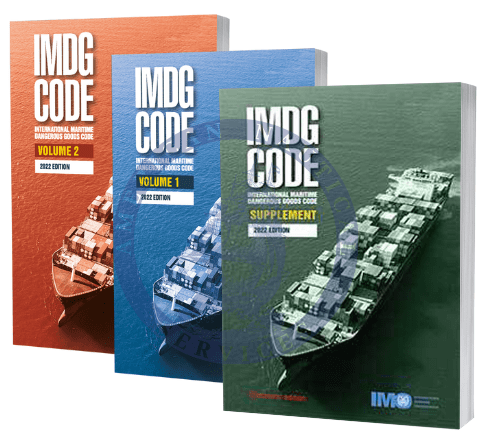
NOW SHIPPING: New IMDG Code 2008 (Amendment 34-08) and IMDG Code Supplement
The new IMDG Code and IMDG Code Supplement, were released November 1, 2008. The English editions of the new IMDG Code will be followed by the French and Spanish versions in early 2009. Please note that the IMDG Code, 2008 Edition, will become mandatory on January 1, 2010, and may be applied voluntarily starting January 1, 2009. The previous edition of the IMDG Code, 33-06, will remain valid until the end of 2009.
This new edition is priced competitively. Take advantage of the recently reduced price for the new IMDG Code Amendment 34-08 and Supplement.
49 CFR Parts 100-185, 2008 Edition Now Available
This latest version of the US Hazmat Regulations includes all changes made through October 1, 2008, currently on sale for $41.85
This version of 49 CFR, Parts 100-185, is a special edition published by Mancomm. It is the most comprehensive and easy-to-use edition available. It includes relevant Federal Register Notices placed in context of subject, thus enabling full disclosure of pending new regulations before they affect your business.
Enjoy upgraded graphics, large print, and color coding headers that make reading and referencing this publication much more user-friendly than the standard GPO version.
Pending Release
IMSBC Code

International Maritime Solid Bulk Cargoes (IMSBC) Code, 2009 Edition
The IMSBC Code is expected in July 2009 and replaces the Code of Safe Practice for Solid Bulk Cargoes (BC Code). The IMSBC Code, adopted on 4 December 2008 by resolution MSC.268(85), may be applied from 1 January 2009 on a voluntary basis, anticipating its envisaged official entry into force on 1 January 2011.
The primary aim of the International Maritime Solid Bulk Cargoes (IMSBC) Code is to facilitate the safe stowage and shipment of solid bulk cargoes by providing information on the dangers associated with the shipment of certain types of solid bulk cargoes and instructions on the procedures to be adopted when the shipment of solid bulk cargoes is contemplated. The IMSBC Code, adopted on 4 December 2008 by resolution MSC.268(85), may be applied from 1 January 2009 on a voluntary basis, anticipating its envisaged official entry into force on 1 January 2011, from which date it will be mandatory under the provision of the SOLAS Convention.
In recent years, the IMSBC Code has undergone many changes, in both layout and content, in order to keep pace with the expansion and progress of industry, including:
- Fully updated individual schedules for solid bulk cargoes
- New individual schedules for such cargoes as spent cathodes and granulated tire rubber
- New provisions about sulphur
- References to the most recent SOLAS amendments
- Updated information from the 2008 edition of the IMDG Code
This Code is recommended to Administrations, shipowners, shippers and masters and all others concerned with the standards to be applied in the safe stowage and shipment of solid bulk cargoes, excluding grain.
Marine Equipment Buyers' Guide 2009
The most complete coverage of marine equipment to date
Marine Equipment Buyers’ Guide 2009 is designed to provide the quickest and most accurate directory for marine equipment buying. Listing contact details for all the major international suppliers in over 2,000 subject areas, this comprehensive book will save you hours of fruitless searching by providing you with the correct contact details first time.
Key selling points/contents:
- Over 13,000 company entries in 1,500 product and service categories
- Categories from anchors, compressors and propellers to winches
- Indexed by company name and product type for quick, easy searching
- Every entry researched and updated
- Easy to use category headings
- All entries include full contact details, with email addresses where available
- Invaluable to anyone involved in sourcing, purchasing, selling or repairing marine equipment
The 2009 Edition includes:
- Listings of all global marine equipment suppliers and their products and services
- Address, phone number, fax, email, web addresses and sales contacts
- The most complete up to date coverage of marine equipment
- Products and services index
- Company index
- Over 1,500 product and services categories
- More than 13,000 company entries listed
Bunker News Directory (32nd Edition)
The brand new 32nd Edition of the Bunker News Directory has been meticulously researched and updated to contain more than 400 pages of key contact details for important personnel and companies involved in the bunkering industry.
Each company listed in the directory is categorized as Supplier, Trader or Broker. Listings feature a complete breakdown of all the vital contact details you might require to get the best deal for your bunkering needs.
Key Features:
- Over 1,200 distinct companies
- A total of 1,450 offices from more than 75 countries around the world
- Personnel now totalling 3,000
- All new editorial and statistics section
Contact details include:
- Postal address
- Telephone number
- Fax number
- Email address
- Website
- Names of key personnel plus where possible, their personal phone numbers, email addresses and mobile phone numbers
Lloyd’s List Ports of the World 2009
Lloyd’s List Ports of the World 2009 gives you exact port co-ordinates, approach details, maps, principal facilities, anchorage, pilotage, radio frequency, local climate including tides, imports and exports, working hours, bunkering, towage, medical facilities, nearest amenities, maximum vessel dimensions, pre-arrival information and much more!
Features:
- New full page 200+ detailed maps for leading ports
- Top 20 Container Port by Container Traffic TEU throughputs
- Port call statistics recording the number of arrivals at each major port and listed by vessel type
- Review on all ship movements through major ports
- Fully updated details of over 2,700 of the world’s commercially active ports
- Comprehensive directory of Shipping Agents with over 3,500 new contacts
- Over 4,000 harbours, 15,000 Wharves and 1,800 Berths
- Our port classifications are quickly becoming the world standard system for all of the world’s docks and harbours
- Lloyd’s Agency contact for every port
Lloyd's List Maritime Directory 2009
Lloyd’s List Maritime Directory 2009 comes in 3 volumes as a complete box set.
With over 40,000 amendments and new entries, the 2009 edition of the Lloyd’s List Maritime Directory is the most authoritative marine shipping publication available, providing comprehensive contact information for the maritime industry.
Volumes 1 & 2: The Lloyd’s List Maritime Directory of Shipowners, Managers and Operators
The Lloyd’s List Maritime Directory of Shipowners, Managers and Operators, offers complete contact details for the worlds shipping companies (including 4,000 new contacts) as well as key characteristics for 75,000 associated vessels.
- Volume 3: The Lloyd’s List Maritime Directory of Shipping Services
The Lloyd’s List Maritime Directory of Shipping Services, lists more than 40,000 company entries from every sector of the global shipping industry, all comprehensively checked and updated for 2009.
Lloyd's Maritime Atlas (25th Edition) coming April 2009
Lloyd’s List Maritime Atlas, 25th Edition, will be publishing in April 2009.
The prestigious Lloyd’s List Maritime Atlas is the oldest and most respected atlas in the shipping industry. The 25th edition, has been completely updated and the traditional design will appeal to many.
This authoritative publication is the comprehensive way to locate the world’s ports and shipping places. The commercial ports are covered in a clear concise manner, focusing on the busiest trading routes. Each regional map features distance tables and ports on a world table.
Key features and benefits
- Over 70 full colour world, ocean and regional maps; distance tables, major canal and river systems, weather hazards at sea and international load line zones
- Precise latitude/longitude co-ordinates of over 8,000 ports and shipping places from around the world
- All major road, rail and airport links serving the ports
- Detailed coastline, geographical and alphabetical indexes
- Includes a free CD-ROM
Brand new to the 25th Edition
- Over 225 new ports and places added, including 89 new Chinese ports
- All new name and port changes
- Global Maritime Statistics – up to date charts and data prepared by Lloyd’s MIU analysts and consultants
The Lloyd’s List Maritime Atlas, 25th Edition, has been designed to link directly with Lloyd’s List Ports of the World 2009 in which more detailed information on ports are available.
Announcements
What's new in IMDG Amendment 34-08
There are many detailed changes throughout the Dangerous Goods List and the chapters of the code. Below are some of the significant additions and changes.
Additional items in the Dangerous Goods List
i) There are 12 new UN numbers going up to 3481, with explosives going up to 0508.
| New UN numbers added in Amendment 34-08 | |
|---|---|
| 0505 | SIGNALS, DISTRESS, ship |
| 0506 | SIGNALS, DISTRESS, ship |
| 0507 | SIGNALS, SMOKE |
| 0508 | 1-HYDROXYBENZOTRIAZOLE, ANHYDROUS |
| 3474 | 1-HYDROXYBENZOTRIAZOLE, ANHYDROUS, WETTED with not less than 20% water, by mass |
| 3475 | ETHANOL AND GASOLINE MIXTURE or ETHANOL AND MOTOR SPIRIT MIXTURE or ETHANOL AND PETROL MIXTURE, with more than 10% ethanol |
| 3476 | FUEL CELL CARTRIDGES or FUEL CELL CARTRIDGES CONTAINED IN EQUIPMENT or FUEL CELL CARTRIDGES PACKED WITH EQUIPMENT, containing water-reactive substances |
| 3477 | FUEL CELL CARTRIDGES or FUEL CELL CARTRIDGES CONTAINED IN EQUIPMENT or FUEL CELL CARTRIDGES PACKED WITH EQUIPMENT, containing corrosive substances |
| 3478 | FUEL CELL CARTRIDGES or FUEL CELL CARTRIDGES CONTAINED IN EQUIPMENT or FUEL CELL CARTRIDGES PACKED WITH EQUIPMENT, containing liquefied flammable gas |
| 3479 | FUEL CELL CARTRIDGES or FUEL CELL CARTRIDGES CONTAINED IN EQUIPMENT or FUEL CELL CARTRIDGES PACKED WITH EQUIPMENT, containing hydrogen in metal hydride |
| 3480 | LITHIUM ION BATTERIES |
| 3481 | LITHIUM ION BATTERIES CONTAINED IN EQUIPMENT or LITHIUM ION BATTERIES PACKED WITH EQUIPMENT |
ii) There are also 5 UN numbers which were previously not listed in the IMDG Code because they were not regulated under it, but are now shown with the observation “Not subject to the provisions of this Code but may be subject to provisions governing the transport of dangerous goods by other modes.”
| UN Numbers not previously listed in IMDG but have been included in Amendment 34-08 | |
|---|---|
| 1910 | CALCIUM OXIDE |
| 2807 | MAGNETIZED MATERIAL |
| 2812 | SODIUM ALUMINATE, SOLID |
| 3166 | ENGINE, INTERNAL COMBUSTION or VEHICLE, FLAMMABLE GAS POWERED or VEHICLE, FLAMMABLE LIQUID POWERED |
| 3171 | BATTERY-POWERED VEHICLE or BATTERY-POWERED EQUIPMENT |
Training
Appropriate training for shore-side staff involved with dangerous goods is now mandatory instead of just recommended, and may be audited by the competent authority. Persons not yet trained may only operate under the direct supervision of a trained person. Please see chapter 1.3.1.1 of the IMDG Code Amendment 34-08.
Marine pollutant

The concept of a severe marine pollutant PP is deleted, they are just designated as P. The marine pollutant ‘bullet’ symbol is also deleted, but a shipper might need to declare any consignment as a marine pollutant. There is a new section 2.9.3 describing the criteria, and chapter 2.10 is rewritten. The new marine pollutant label is a dead tree and dead fish.
IMO tank instruction column
The IMO tank instruction column disappears from the Dangerous Goods List because the transitional provisions on their use will have expired by the time this amendment becomes mandatory on 1 January 2010.
Excepted quantities

There is a new column 7b in the Dangerous Goods List for excepted quantities. These are small amounts, up to 30g or 30ml per inner package, 1kg per outer package. These are subject only to the rules of the new chapter 3.5, part 2 (classification) and some sections of 4.1 (packing) and 5.4 (documentation). They will be labeled with an ‘excepted quantity’ label and the class number. The dangerous goods note shall state the words “dangerous goods in excepted quantities” together with the description of the shipment. An entry E0 in column 7b indicates that a substance may not be transported in excepted quantities. Codes E1 to E5 indicate different quantity limits according to a table in chapter 3.5. The total number of excepted quantity packages in a CTU shall not exceed 1000.
Limited quantities
For a substance not permitted in limited quantites, the column 7a entry “None” becomes “0”.
Chapter 2.7 Class 7 – radioactive material
For class 7 radioactives, chapter 2.7 is completely rewritten, and there is a new chapter 1.5, ‘general provisions concerning class 7’.
NOW SHIPPING: 33 CFR: Navigation and Navigable Waters, 2008 Edition
The 2008 Edition of 33 CFR is now available. This edition includes all changes made before July 1, 2008.
This new edition is available at the following great prices:
- Volume I, Parts 1-124: was
$60.00, now $28.00 - Volume II, Parts 125-199: was
$61.00, now $31.00 - Volume III, Parts 200-END: was
$60.00, now $25.50
Title 33 of the US Code of Federal Regulations (33 CFR) contains all US regulations dealing with Navigation and Navigable Waters. The Title is organized into three volumes, and the regulations it contains are authored by the US Coast Guard, the Army Corps of Engineers, and the Saint Lawrence Seaway Development Corporation.
| Title | Volume | Chapter | Parts | Regulatory Entity |
|---|---|---|---|---|
| 33: Navigation and Navigable Waters | 1 | I | 1-124 | US Coast Guard |
| 2 | 125-199 | |||
| 3 | II | 200-399 | Army Corps of Engineers | |
| IV | 400-499 | Saint Lawrence Seaway Development Corporation |
Archive
NOW SHIPPING: 46 CFR: Shipping, 2008 Edition
Title 46 of the US Code of Federal Regulations contains all US regulations dealing with shipping into, out of, and within the United States. The Title is organized into nine volumes, and the regulations it contains are authored by the US Coast Guard, the Maritime Administration, and the Federal Maritime Commission. A new edition is finalized on October 1st of every year.
The new 2008 editions of all CFR titles have red covers. Changes to 46 CFR since the last edition year, aside from non-substantive housekeeping changes, include the following:
- Rates for pilots in the Great Lakes Pilotage have been increased an average 8.17% over the last ratemaking that was completed in September 2007. (46 CFR, Part 404)
- Transportation Worker Identification Credential (TWIC) cards are now mandatory for all mariners and workers who require unescorted access to secure areas. It is estimated that this effects more than 1 million workers including longshoremen, truckers, port employees and others. (46 CFR, Parts 10, 12 and 16)
- Changes to US Coast Guard requirements for credentialing of US merchant mariners, amending the training requirements for vessel security officers. These changes essentially are to harmonize with the International Convention on Standards of Training, Certification, and Watchkeeping for Seafarers, better known as the STCW Convention. (46 CFR, Parts 10 and 15)
Each of the nine volumes of 46 CFR are priced individually, from $8.00 for the third volume to $26.50 for the first or seventh volume. These prices are more than 40% discounted from the Government Printing Office list price.
| Title | Volume | Chapter | Parts | Regulator |
|---|---|---|---|---|
| 46: Shipping | 1 | I | 1-40 | US Coast Guard |
| 2 | 41-69 | |||
| 3 | 70-89 | |||
| 4 | 90-139 | |||
| 5 | 140-155 | |||
| 6 | 156-165 | |||
| 7 | 166-199 | |||
| 8 | II | 200-399 | Maritime Administration (MARAD) | |
| III | 400-499 | Coast Guard (Great Lakes Pilotage) | ||
| 9 | IV | 500-END | Federal Maritime Commission |
See us in Savannah
The Dangerous Goods Advisory Council (DGAC) is hosting their 30th Annual Conference and Hazardous Materials Transportation Exposition November 5-7, 2008, at the Hyatt Regency in Savannah, Georgia, and we’re going to be there! Visit the DGAC website for more about the conference.
Stop by our booth in the exhibitors’ hall for a demo of IMDG Code e-Learning, Hazcheck Workstation, or just to say “Hi.” Here’s what we’ll be showcasing:
Hazcheck Gateway

Hazcheck Gateway allows agents, shippers, and forwarders to easily check their DG consignments against the requirements of the IMDG Code before sending them to you as an e-mail booking request. An attached EDI Dangerous Goods Declaration eliminates re-keying of information. If the user maintains optional Hazcheck Gateway files on schedules, port, and vessel restrictions, the booking requests can be specific to selected sailings. Hazcheck Gateway can be easily attached to a current website and interfaced with a booking system.
Request a quotation for Hazcheck Gateway
Hazcheck Workstation

Hazcheck Workstation displays key information for substances you select, validates a mixed load for IMDG Code segregation compliance, displays relevant packaging options, and contains the full English language IMDG Code text. It also allows the user to produce a valid and correct Multimodal Dangerous Goods Declaration (a.k.a. “IMO Dec.”). Hazcheck Workstation is a great tool for streamlining HAZMAT shipment.
Download a trial of Hazcheck Workstation
IMDG Code e-Learning

IMDG Code e-learning is delivered as interactive computer-based training in the application of the provisions of the IMDG Code appropriate to the student’s role in the transport of dangerous goods by sea. It is designed primarily for shore-side personnel, including shipping line staff processing dangerous goods shipments.
When setting up the course, functions are selected according to the student’s job role and the course content is automatically configured for that role. It is intended to develop competence for job functions specified in table 1.3.1.5 of the IMDG Code. It focuses on function-specific training but also includes general awareness and safety training.
The course is structured in modules addressing topics such as classification and documentation. Each module is divided into elements addressing specific aspects of that topic. There are tests included in each module to monitor progress, with results shown in a final course certificate.
For more details, please take the IMDG Code e-Learning tour
IMDG Code on CD

The full text of the IMDG Code, including Supplement, is available on CD, in English, French, and Spanish. The text is searchable and contains cross-links to references within the Code. The Dangerous Goods List is searchable by UN number and Proper Shipping Name. A form is included to easily generate a Dangerous Goods Note.
The IMDG Code on CD activates on only one computer per license.
Download a trial of IMDG Code on CD
Drop by our booth in the exhibitor hall with any questions, give us a call at (877) 999-3321, or email us at info@maritimecompliance.com
IMO-Vega Database (v12.0) 2007

IMO-Vega is an essential tool for anyone involved in shipping: ship-owners and operators, shipbuilders, classification societies, casualty investigators, governments, insurers and underwriters, port authorities, surveyors and many others. The IMO-Vega Database, developed jointly by IMO and Det Norske Veritas (DNV), puts all the necessary information at your fingertips. Given year of build, ship type, ship size, cargo, trade area and flag, IMO-Vega will quickly identify the requirements applicable to the ship in question.
ISGOTT (International Safety Guide For Oil Tankers & Terminals) 5th Edition

This is the definitive Guide to the safe carriage and handling of crude oil and petroleum products on tankers and at terminals.
The International Safety Guide for Oil Tankers and Terminals (ISGOTT) was first published in 1978 and combined the contents of the ‘Tanker Safety Guide (Petroleum)’, published by the International Chamber of Shipping (ICS), and the ‘International Oil Tanker and Terminal Safety Guide’, by the Oil Companies International Marine Forum (OCIMF). In producing this Fifth Edition, the content has again been reviewed by these ICS and OCIMF, together with the International Association of Ports and Harbors (IAPH), to ensure that it continues to reflect current best practice and legislation.
Also includes a CD-ROM in PDF Format.
Emergency Response Guidebook 2008 Edition Now Available

The first update since 2004 of the Emergency Response Guidebook contains the latest dangerous goods lists from the United Nations Recommendations, as well as from other international and national regulations. Available in standard- and pocket-sized editions.
Features include:
- Updated proper shipping names and identification numbers
- Includes proper shipping names from the UN 13th Edition
- Additional information about water-reactive chemicals
- Three-digit guide numbers to help you quickly identify specific chemicals and potential dangers
- Guide pages with two-page format to accommodate expanded information


IMO (English)


Witherby